


graffiti alphabet 3d graphic design_drawing murals_3d graffiti alphabet arrow_graffiti fonts
Block And Black Graffiti Letter
|
|
|
 |


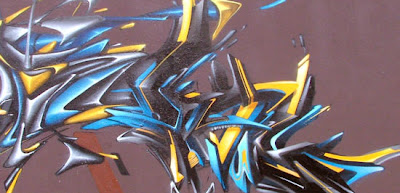


| You are interested in art and love with the picture? you can see and visit the website Graffiti alphabet to see this type of sharing pictures as art Graffiti Alphabet,3D Digital Arrow Graffiti Alphabet,3D Digital Graffiti Alphabet,Digital Graffiti Alphabet,Graffiti Sketches,Tag Graffiti Alphabet,Graffiti Art,Graffiti Murals,Graffiti,Graffiti Alphabet Letters,Alphabet Graffiti Arrow, 3D Graffiti, Graffiti Letters,Graffiti Fonts,Graffiti 3D Alphabet,the Alphabet in Bubble Letters,Printable Alphabet Stencils,Graffiti Letter Fonts,3D Graffiti Wallpaper, Graffiti Alphabet Stencils. |

Tag Graffiti Alphabet Explained
A graffiti tag is a simple simply a drawing of the artist’s nickname, possibly with a message, drawn mostly in just one colour … as you’ll see in the graffiti tags video below…
Here’s some more info on graffiti tags and other graffiti terms to get you up to speed …
Graffiti sketches is where most newcomers begin but really you should start by asking yourself - graffiti - what does it really mean to you? Most people see it as something that emerged only in modern society, scribbled by urban youth on railway bridges. However, its use can be traced back to ancient civilisations, such as the ancient Egyptians whose hieroglyphics could be considered a form of what we know today as graffiti. One can even say that graffiti or writing, as it is more commonly known, dates back to the origins of mankind itself, when Neanderthal man’s sense of his environment was expressed through cave drawings.
More often than not graffiti has been characterised as vandalism due to its associations with the spray-painted drawings you often see plastered over buildings and walls in cities.
Graffiti art can be categorised in three common forms: Tags, Pieces and Labels. All of us have walked down a street and seen various walls covered with graffiti, but can we differentiate one item of graffiti from another? The most common and the easiest to recognise is a tag.
A tag is usually a simple one-coloured design (though it can be more complex). Put simply, it is a depiction of a writer or artist’s nickname or message, and its aim is to send a message to other writers.
A piece or masterpiece is a more complex form of graffiti art where a writer usually starts with some kind of pre-conceived plan or sketch. A piece tends to take graffiti art more in the direction of character art, which has a big fanbase. People will often be able to distinguish a writer’s work by their character designs alone. Artists like D*Face, Insa, Sickboy and Inkie can all be recognised by the characters or symbols in their pieces.
A label is when a writer’s tag or character design is printed on posters or stickers. Labels can be found in most cities around the world. This can be a great way for all kinds of artists to promote their art far and wide; usually tags are quite hard to see and they are only going to draw the attention of people interested in street art. You often see labels plastered on the back of street signs, lampposts, and anywhere with a smooth surface that can have something stuck to it.
Although graffiti art seems to have been part of the mainstream for ages, it was not until the 1970s that graffiti reinvented itself with a more modern term named writing, which first took root in the United States and later spread across the water to Europe.
The last decade has seen writing really take hold of the global art scene with celebrities emerging from the hub of graff artists around the world. It is only now that you hear about graffiti events like Secret Wars and people like American actress Angelina Jolie forking out £100,000 for an original piece by the notorious Bristol-born artist Banksy. Also, a new record was recently set when a piece went for a massive £280,000.
Graffiti art is the new cool, with hundreds of companies in the last few years jumping on the street art bandwagon. Graffiti is no longer just a shunned art form, yet it still manages to stay true to its origins by remaining accessible to the younger generation. Graffiti it seems is here to stay.
You are interested in art and love with the picture? you can see and visit the website Graffiti alphabet to see this type of sharing pictures as art Graffiti Alphabet,3D Digital Arrow Graffiti Alphabet,3D Digital Graffiti Alphabet,Digital Graffiti Alphabet,Graffiti Sketches,Tag Graffiti Alphabet,Graffiti Art,Graffiti Murals,Graffiti,Graffiti Alphabet Letters,Alphabet Graffiti Arrow, 3D Graffiti, Graffiti Letters,Graffiti Fonts,Graffiti 3D Alphabet,the Alphabet in Bubble Letters,Printable Alphabet Stencils,Graffiti Letter Fonts,3D Graffiti Wallpaper, Graffiti Alphabet Stencils.
This modern history of graffiti began in the 60s in the West Coast of America, primarily Philadelphia. Some call this era the ground work era and it was artists such as Top Cat who began the evolution. Soon the movement spread to New York with writers inspired by their brothers across the country, resulting in ‘attacks’ of graffiti on trains as a method of political protest instead of directly violent acts. The style during this formative period in the history of graffiti is hard to discern with bubble lettering and wildstyle both being utilized heavily by different artists. However, as the movement moved forward into the 70s - the so called pioneering era, the wildstyle of Tracy 168 began to symbolize the arts movement.
At the same time in the history of graffiti, we can see a major rise in the sheer number of tags being created by artists, with mass bombing and tagging becoming more active. The size of the works began to increase with artists preferring to move into safer areas such as train depots so that they could create more intricate works. This included groups such as TF5 painting entire cars with the ever more popular spray paint.
This was to be the high water mark though in the history of graffiti as an underground art movement for the late 70s saw little innovation in the movement, probably strongly effected by the increased countermeasures employed by the city of New York. What resulted was a change in direction, away from a purely artistic and political focus into a musical collaboration with hip-hop which is still seen today.
That isn’t to say that was the end of graffiti, what followed in the history of graffiti was a period of acceptance by the art world at large for their style, most recently with the prominence of artists such as Banksy. However, graffiti has never strayed too far from it’s roots, with the Berlin Wall showing it’s continued power in the 1980s as a symbol of revolution. The same is true in Palestine today, and hence the basic goals which were present at the start of the history of graffiti still exist today.

Fafi, along with Miss Van, is one of the world’s most famous female graffiti artists. Read more about the girls graffiti art below:
Fafi was born and raised in Toulouse France - the home of another "graffiti girl", Miss Van. She has been on the art scene since 1994 when she first witnessed the graffiti street art on her hometown walls. Inspired by the scenes depicted, she started her work and hasn’t looked back since.
Fafi’s style is quite unique. Fafi tends to depict women in various forms. She identifies a particular stereotype and will render it to create a "Fafi Girl". She paints exaggerated stereotypes of women in a cute and "Fafi" way. Her style helped re-define the graffiti scene and open new doors with what the artwork could be.
After she drew the public eye upon her, she started to travel around the world. Europe, USA, Japan, Hong-Kong, all got "Fafi’ed". Her work would appear around the world in galleries and advertisements. The world was truly her canvas!
Sony became infatuated with the cute and iconic figures Fafi would create and hired her to design a six-character toy set for their Time Capsule videogame set. This only furthered her career as she made the transition from two dimensional to three dimensional work. Other companies followed suit and she procured contracts from Collette, Coca-Cola, M.A.C cosmetics, Adidas and other companies for her figurines.
Fafi got a lot of press coverage as well during this time. She was featured in many prestigious magazines such as Vogue, Elle, XLR8R, and Yen. She then published a few books, Girls Rock (2003) and Love and Fafiness (2006). These prints are very successful and can be seen in libraries and museums to purchase.
When I first wanted to draw my name in graffiti style lettering, I wasn’t sure where to begin … I never thought of looking on the internet then for graffiti tips … yet the web has tons of resources on graffiti art and drawing graffiti lettering … just watch the video above, read the article below or take a look at this article on names written in graffiti …
Graffiti art has, over time, become a form of artistic drawing. In another article, I’ve captured the main characteristics of artistic art in more detail but let’s do a quick review here.
We know that graffiti art is often loud (meaning brightly colored), has a 3D look and feel to it, and looks mostly stylish. One might even classify graffiti art as contemporary art. Everything about graffiti is an expression of the culture of some group or country.
Although graffiti art is most widely known as art drawn by vandals on public walls with spray cans, the same term can be extended to represent art with similar characteristics as mentioned above.
You may be drawn to drawing graffiti names because graffiti art looks stylish with its bright attractive colors, and that applies to graffiti texts as well.
To start drawing graffiti names, you need to prepare the following drawing tools. You need a light pencil, preferrably HB, and a set of permanent magic markers with a variety of colors.
Next, you need to decide on the style of the texts. There are literally thousands of styles to choose from. Just take a look at the thousands of font types available freely on the Internet for download. You may want to visit one of these websites and choose a font design that you really like. You’ll be using this as your reference. Some websites even allow you to create a preview image with the selected font type. Simply save the image to your computer for reference.
Start drawing with your pencil on the surface. Draw lightly at first so that you can erase any mistakes you make. Sometimes, your texts may be too big or small, and you can easily rectify this by using a dust free eraser.
Once you’re satisfied with how the graffiti name looks, trace the outline with a fine magic marker. The shapes will start to emerge now. Then start filling in the different letters with colors. Be bold and creative here. After all, it’s graffiti texts, so you want it to come out attractive, bold and stylish.
Use a different color to create some shades just inside the outlines. This will create the illusion that the texts are 3D. If you’re familiar to using Photoshop or any image editing software, this is similar to creating the emboss effect.
Drawing the drop shadow is optional but if you want your graffiti name to look more alive and realistic, by all means give your graffiti name a light shadow below.
You are interested in art and love with the picture? you can see and visit the website Graffiti alphabet to see this type of sharing pictures as art Graffiti Alphabet,3D Digital Arrow Graffiti Alphabet,3D Digital Graffiti Alphabet,Digital Graffiti Alphabet,Graffiti Sketches,Tag Graffiti Alphabet,Graffiti Art,Graffiti Murals,Graffiti,Graffiti Alphabet Letters,Alphabet Graffiti Arrow, 3D Graffiti, Graffiti Letters,Graffiti Fonts,Graffiti 3D Alphabet,the Alphabet in Bubble Letters,Printable Alphabet Stencils,Graffiti Letter Fonts,3D Graffiti Wallpaper, Graffiti Alphabet Stencils.
In this article, we’ll take graffiti art to mean wall art drawn with spray cans in public places. This is necessary to avoid confusion, for graffiti art can also be taken to mean an act of vandalism in a very general sense.
But when I was taking a closer look at the origins of graffiti art, it appears that this art form didn’t appear out of nowhere. In fact, it has risen out of a need for expression from people who didn’t have the money and the means to participate actively in both the art and the music scenes.
This urge or need to express became so strong that these people started creating their own art and music using what was available to them. And not much was available to them. So they turned to using their mouths (beat-boxing), scratching on tables (to simulate the scratching of records) and invented rap. Hip hop evolved out of rap music.
But the names and labels isn’t all that important. What’s more important is to understand the intent behind these art forms. What caused these people to invent hip hop music and graffiti art?
At the root of it is rebellion. There’s something that these artists are unhappy about, and they’re letting the world know about it. For instance, if you’re a fan of rap music, you’ll often hear some angry lyrics. It’s not within the scope of this article to discuss the source of anger. For now, it’s good enough to understand that rap and hip hop music stems usually stems from anger.
Similarly, for graffiti art, rebellion is made known by creating wall murals in public places. Doing this is illegal but yet, many have done this and it does appear that graffiti art is now out of control.
Artists worldwide have chosen this particular outlet to express themselves, to make sure that they’re heard. Graffiti art has been known to be a tool to get attention.
But what has this strong urge to grab attention (so much so that artists have to risk their neck by spraying on walls illegally) got to do with hip hop music?
Well, understanding the culture where hip hop music and graffiti music come from (and they come from the same source), one would guess that graffiti art could be the cheapest form of advertising (in fact, it’s free!). It’s the ultimate word-of-mouth marketing for the hip hop artists. And in essence, since both art forms represent the same dissent voices of the people of that culture, who’s to say or judge it’s wrong to create graffiti art?

How to draw graffiti on paper?

Learn the first step to creating great graffiti art with our excellent graffiti resources. Before you consider drawing graffiti on larger canvases such as walls, you need to master the skill of drawing graffiti letters and characters on paper first on a small scale, then worry about upsizing it!
Watch this video that shows an artist drawing graffiti on paper, then read the artice on creating graffiti art below.
How to Graffiti Alphabet Letters how to draw Graffiti Letters …
How to Graffiti Alphabet Letters how to draw Graffiti Letters on paper. How to draw graffiti letters, start by creating each letter of the alphabet to create your own graffiti alphabet, outlined in black and white.
How to sketch graffiti on a piece of paper.
Now read this …
Before embarking on Graffiti Painting, one should be aware that there is a thin line between vandalism and graffiti. Only when one is safely on the right side of the law, should any kind of creative liberty be assumed through Graffiti Painting.
Painting Graffiti is an art of big scale. Its grandeur is enhanced by the size of the image. Stark and bold colors, along with the fonts, those themselves are an art form of their types. These are the hallmarks of Graffiti Painting.
Steps for Graffiti Painting.
• Subject. Choose the subject for your graffiti painting and starkly demarcate the shadow areas. Graffiti painting works only when one has clear chiaroscuro effect. Draw a small-scale image of the subject of your graffiti, taking care that there is not too much detailing. Subjects for beginners should appropriately be inspired from the artwork in comics. The fonts and rendering in comics make for a great beginners’ work.
• Coloring. Once you have outlined your graffiti sketch on a small scale, its time to fill in colors and imagine the entire work on a large scale. What looks awesome on small size, does not essentially translate into a large-scale graffiti work, neither is there a foolproof way to judge that. However, its this uncertainty only that makes the process of Painting Graffiti an evolutionary one.
• Outlining Work Area. Outline your Graffiti work area into a rectangle, using charcoal or white diluted paint. You can use a string to mark out a rough grid on the work area. Using charcoal, transfer the small-scale model onto the work surface.
• Background. Once you are done with outlining the work surface, spray a diluted neutral colored paint (White or Pale Cream) using aerosol can on the large areas of your Graffiti Painting, which are to be painted with dark colors. You may also use Paint Rollers to fill in symmetrical areas with colors. Make sure to spread a very thin layer of paint initially. The painted area should be left to dry for at least an hour.
• Coloring. Using aerosol cans filled with different colors, start with large areas of your Graffiti Painting, and move on slowly to small areas. Do not let the can’s nozzle linger on for more than three seconds at one place, as this would lead to the dripping of paint (of course, if that’s the effect you want then carry on the drip way).
• Fine Defining. Use fine brush and paint (preferably Emulsion) to bring out the fine lines and the effects of your graffiti painting.
• Preservation. If you want some longevity for your graffiti painting, spray it with a thin layer of varnish. You are done with your graffiti painting.
One very important fact of graffiti painting is its idea, its central motive. If you are not excited by an idea or by the colors, or by drawing the initial sketch, it’s suggested that you do not venture into this activity. Art without madness is no fun!
.jpg)
blue alphabet grafitti


 Freestyle Graffiti Letter


